How to Choose a Shoe Cleaner That Is Safe for Canvas, Suede, and Leather
Different shoe materials need different care. Learn how to choose cleaners and tools that suit each material before you damage a favorite pair.
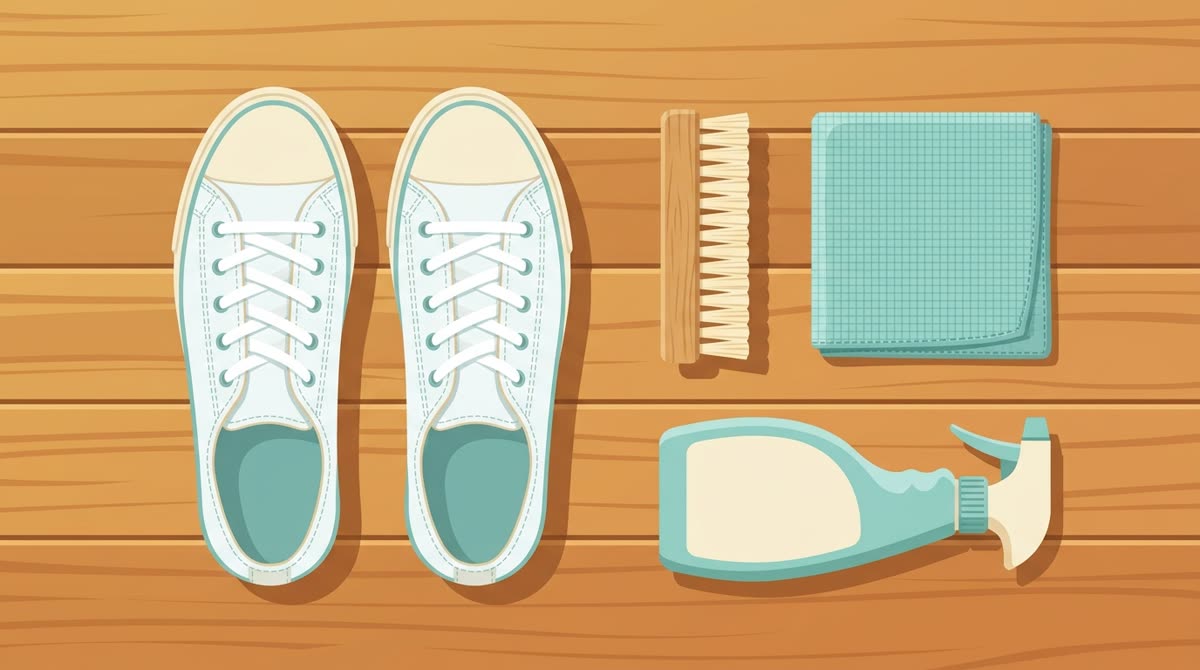
Start with the material, not the product
The most common mistake is using one cleaner for every shoe. Canvas, suede, and leather react differently to water, soap, and scrubbing, so the first step is always to identify what your shoes are made of.
Check the label inside the tongue or the store listing. If you are unsure, start with the gentlest method.
Canvas: the most forgiving, but still needs care
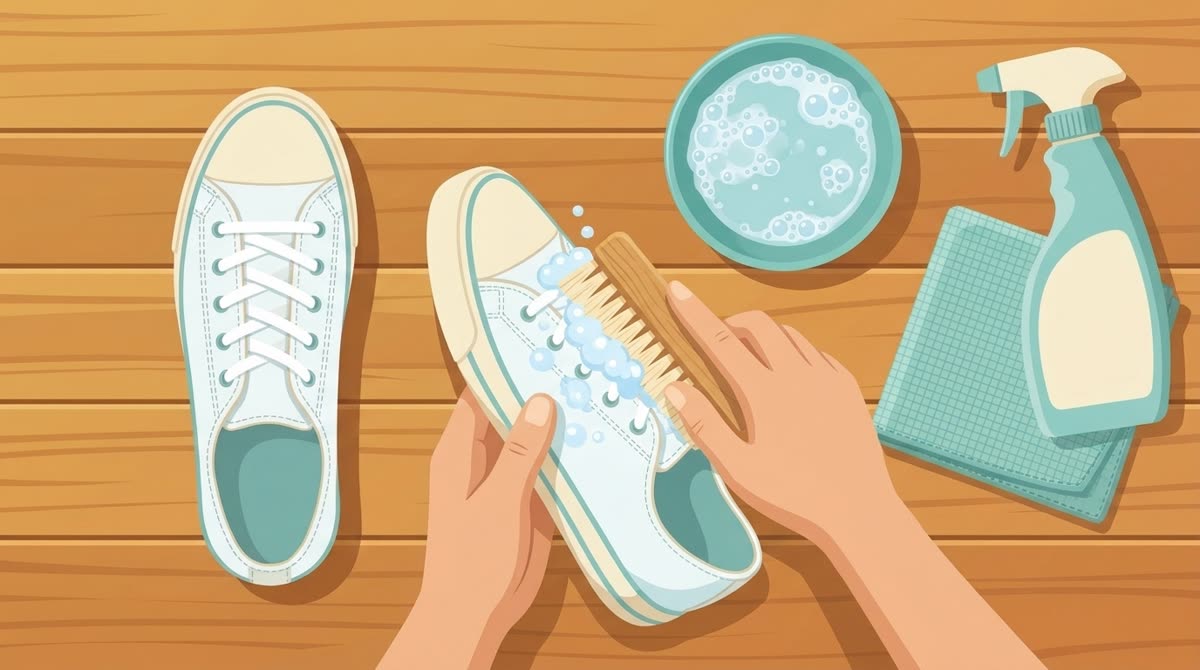
Canvas shoes can usually be cleaned with mild soap, water, and a soft-bristled brush. Scrub gently along the grain and rinse the cloth you use rather than soaking the whole shoe for a long time.
- Remove the laces and removable insoles if you can.
- Use a soft brush, not a wire brush.
- Avoid strong bleach, which can damage color and fibers.
Many manufacturers advise against machine washing because it can weaken the glue holding the sole. Check the instructions from your shoe brand.
Suede and nubuck: keep it dry rather than wet
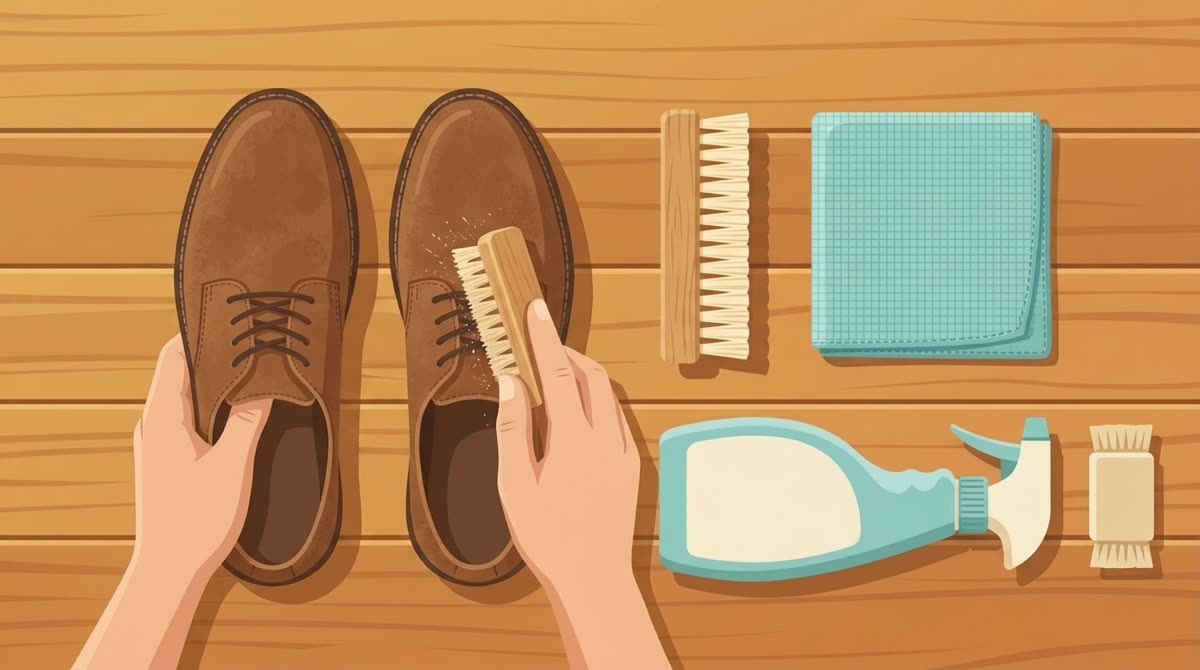
Suede absorbs water and its texture changes easily. For light marks, a suede brush and a suede eraser used on dry shoes are usually enough.
Liquid suede cleaners exist, but use only a little and follow the package directions. Avoid soaking or rinsing suede under running water.
Real leather and synthetic leather
Leather can usually be wiped with a damp, well-wrung cloth and then dried. Once dry, many people apply a leather conditioner so the surface does not dry out and crack. Synthetic materials are more water resistant, but should still not be scrubbed with harsh tools.
- Wipe off loose dirt with a clean cloth first.
- Test any cleaner on a small hidden area.
- Do not dry shoes in direct sunlight or near a heater.
How to dry shoes safely
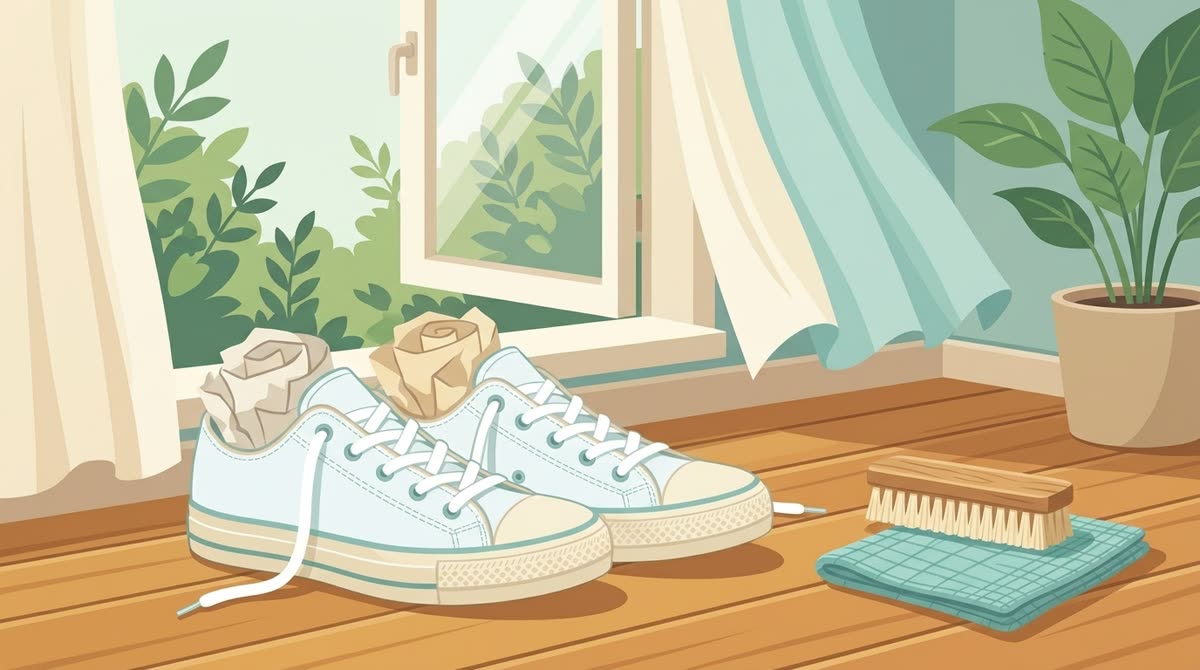
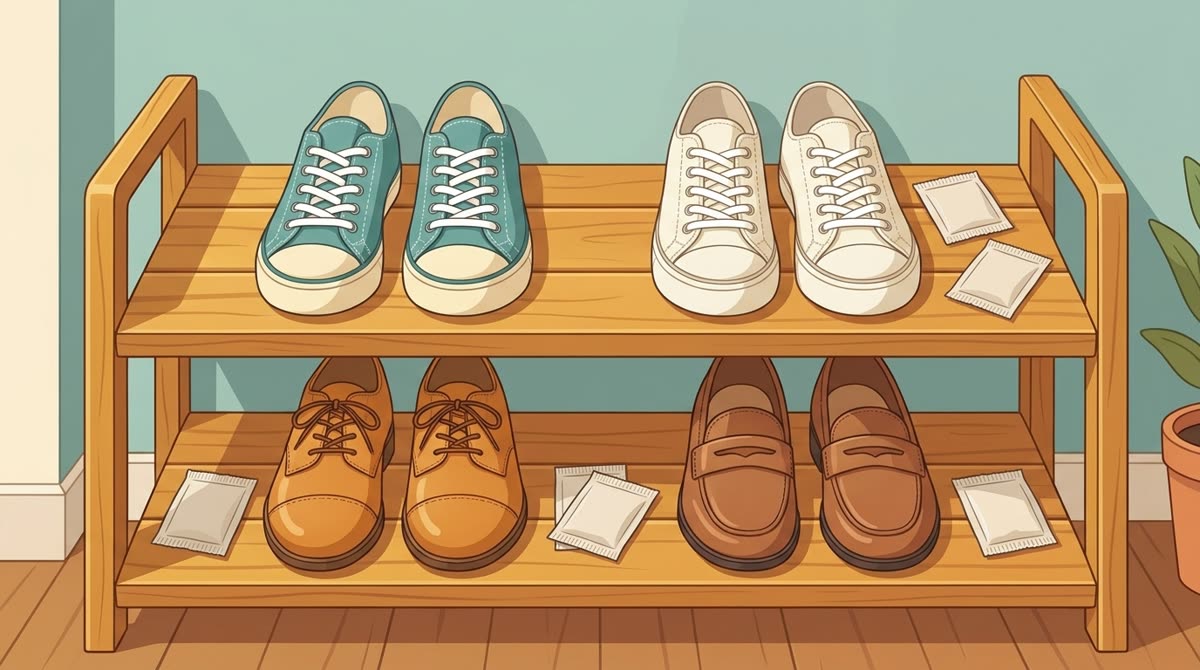
Dry shoes in a shaded, well-ventilated spot. Stuff the inside with newspaper or a clean cloth to keep the shape and absorb moisture, and replace the stuffing once it is damp.
Excess heat from direct sun, a hair dryer, or a heater can weaken adhesives and make materials stiff or warped.
Checklist before you buy care supplies
For routine care, a soft brush, a microfiber cloth, and a cleaner suited to your material are often enough. Add the rest according to your needs and habits.
- Match the product to your shoe material (canvas, suede, leather, synthetic).
- Read the usage directions and warnings on the package.
- Check the volume and compare price per milliliter, not just price per bottle.
- Choose the right brush bristles: soft for suede and canvas.
- Read reviews from buyers who mention the same material as yours.
Frequently asked questions
Can all shoes go in the washing machine?
Not always. Many manufacturers advise against it because it can weaken sole adhesive and change the shape. Follow your shoe brand's instructions.
Should I test a cleaner first?
Yes, we recommend it. Try a small hidden spot, wait until it dries, and see whether the color or texture changes.
How often should I clean my shoes?
There is no fixed rule. Clean them when they look dirty and brush off light dust regularly so dirt does not build up.